How to Open a Med Spa in 2026: 7-Step Plan, Costs & Requirements
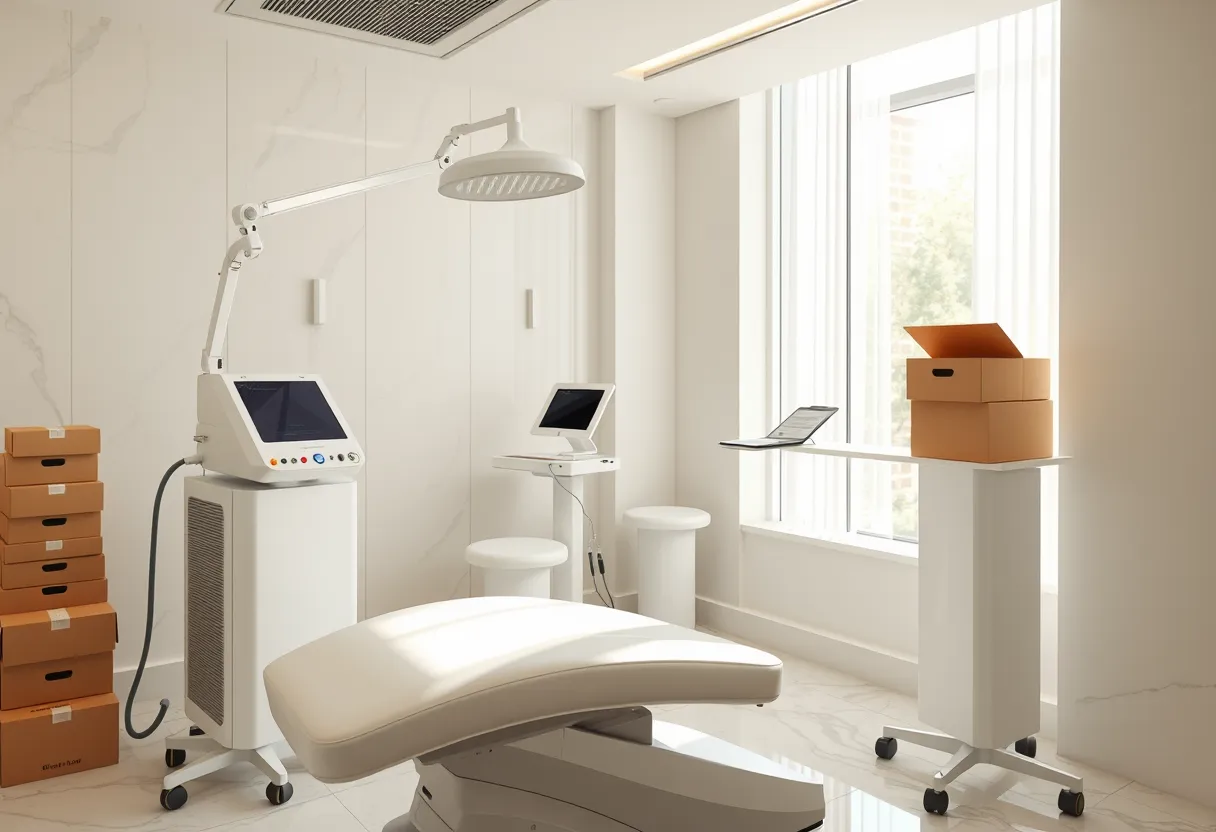
The medical spa industry is one of the fastest-growing corners of healthcare — the average U.S. location brings in about $1.4 million a year, according to the American Med Spa Association (AmSpa), and demand for injectables, laser treatments, and body contouring keeps climbing. But between medical regulations, six-figure equipment, and a crowded market, opening a med spa is not a “hang a sign and go” business.
Here’s the complete playbook for opening a med spa in 2026 — costs, legal structure, the business plan, and the launch steps that separate booked-solid openings from empty treatment rooms.
Step 1: Understand the legal structure first
This is where most first-time owners get burned. A med spa delivers medical treatments, which means:
- You need a medical director — a licensed physician who oversees protocols and (depending on the state) performs or delegates treatments.
- Many states enforce the “corporate practice of medicine” (California, Texas, New York among them), meaning a non-physician can’t own the medical practice directly. The standard solution is an MSO (Management Services Organization): the physician-owned entity handles medical care, and your MSO owns the brand, marketing, equipment, and operations.
- Who can inject varies by state — RNs, NPs, and PAs have different delegation rules everywhere.
Budget for a healthcare attorney to set this up correctly — rules differ by state, and AmSpa tracks them in all 50. It’s the least glamorous line in the budget and the most important.
Step 2: Know the real startup costs
There’s no reliable public industry average for startup costs, so treat the table below as our planning estimate for a 2–4 room med spa in 2026, built from vendor and provider quotes — verify every line with real quotes in your market. (For one public data point, Moxie, a med spa services company, puts laser/IPL systems at $50,000–$75,000.)
| Item | Typical cost |
|---|---|
| Build-out & interior | $50,000–$150,000 |
| Devices (laser, RF, body contouring) | $100,000–$300,000 |
| Injectables & consumables (initial) | $10,000–$30,000 |
| Legal, licensing, medical director | $15,000–$40,000/yr |
| Software, booking, EMR | $3,000–$10,000/yr |
| Website & brand | $3,000–$10,000 |
| Marketing (first 6 months) | $20,000–$60,000 |
| Operating reserve (6–12 months) | $50,000–$150,000 |
Estimated total: roughly $250,000–$500,000 for a typical opening — less if you lease devices and start with injectables only, more for a flagship location.
Two ways owners keep this sane: lease or finance devices instead of buying (protects cash while you validate demand), and open with a focused menu — injectables plus one device platform — then expand from revenue.
Step 3: Write a business plan a lender will take seriously
For a section-by-section template, see our medical spa business plan template. Your plan needs five numbers nailed down:
- Treatment menu & pricing — anchor around injectables (Botox/fillers), which drive frequency, plus 1–2 device treatments with strong margins. (Our med spa pricing guide breaks down what treatments go for in 2026.)
- Revenue model — average ticket × visits per month. A modest 300 visits/month at a $250 average is $75K/month.
- Membership plan — recurring revenue smooths the seasonality every med spa faces (3 membership tier examples). Even 100 members at $99/month is a $10K floor.
- Capacity and break-even math — model when revenue covers costs at realistic utilization. AmSpa contributor Bryan Durocher suggests targeting about 45% capacity by the end of year one, building toward 75%.
- Patient acquisition plan — the section lenders read twice. Be specific: Google rankings, ads budget, referral program, opening promotions.
Step 4: Location and build-out
- Visibility matters less than parking and privacy. Patients will drive to you, but they won’t circle the block.
- Retail-adjacent suburban plazas and medical office buildings both work; rent should stay under ~10% of projected revenue.
- Design for treatment room throughput — rooms are your inventory. Three well-scheduled rooms out-earn five idle ones.
Step 5: Build the digital foundation before opening day
Here’s the part we see owners get backwards: they spend $300K on the build-out and then launch with a $500 template website — the first thing every single prospective patient checks.
Before you open, you need:
- A fast, conversion-focused website with a page for each treatment, pricing transparency, online booking, and reviews front and center. (Here’s what a med spa website should cost and what the best ones look like.)
- A Google Business Profile created and verified early — reviews take months to accumulate, so start the moment you have a lease.
- A pre-opening list. Run a “founding member” offer 60 days before opening. A real list of interested patients means your first weeks start with bookings instead of empty rooms paying full rent.
This is exactly the foundation we build for new med spas — a site engineered to rank and convert from day one, so the marketing budget lands on something that works. See how in our med spa marketing guide.
Step 6: Hire for retention, not just credentials
Your injector is your product. Patients follow great injectors, so hire slowly, pay on production with a base, and lock in non-solicitation agreements. One great injector plus one aesthetician is a perfectly good opening team.
Step 7: Launch marketing that compounds
For a full menu of channels, see our 30 med spa marketing ideas.
Paid ads get you opening-month bookings; SEO and reviews get you year-three freedom from ad spend. Run both from day one:
- Google Ads on high-intent local searches (“botox near me”)
- A review engine — ask every happy patient, respond to all
- Local SEO so you rank when ads are off (full med spa SEO guide here)
- A referral program — aesthetics is a word-of-mouth business
What owners actually earn
AmSpa’s 2024 State of the Industry report puts average med spa revenue at about $1.4 million per location ($1,398,833), and the industry keeps expanding — AmSpa counted 10,488 U.S. med spas in 2023, up 18% from the year before. On profit, AmSpa’s financial advisors suggest aiming for a 15–20% take-home margin on a 75% gross margin; there’s no verified single figure for what owners net. Year one is leaner — expect to reinvest most of what you make into marketing and staff while your book fills.
The bottom line
Opening a med spa in 2026 is a six-figure bet with genuinely strong economics — if the legal structure is right, the menu is focused, and patients can actually find you.
If you’re at the “getting found” stage, that’s what we do: Medspafy builds websites that rank and convert for med spas, then grows them with SEO and marketing. See our med spa website design service — a $100 deposit credited to your project — and launch with a digital foundation as strong as your build-out.
Sources
- AmSpa — 2024 Medical Spa State of the Industry: executive report recap
- AmSpa — Med spa statistics
- AmSpa — Med spa laws by state
- AmSpa — How to build a recession-proof medical spa (margin targets)
- AmSpa — Med spa business planning: a step-by-step guide
- Moxie — Opening a med spa: how much money do you really need?
Frequently asked questions
How much does it cost to open a med spa? +
There is no reliable public industry average — costs swing widely with location, build-out and devices. Our planning estimate for a typical 2–4 room opening is roughly $250,000–$500,000; a lean injectables-only start (leasing devices) costs far less. The biggest line items are build-out, devices and an operating reserve.
How much do med spa owners make? +
There is no single verified figure for owner income. What is published: the average U.S. med spa brings in about $1.4 million a year (AmSpa 2024 report), and AmSpa's financial advisors suggest aiming for a 15–20% take-home margin on a 75% gross margin. Year one is usually much leaner while you build a client base.
Do I need to be a doctor to open a med spa? +
In most states, no — but you do need a medical director (a licensed physician) and, in states with corporate practice of medicine laws, an MSO structure where a physician-owned entity handles the medical side. Rules vary heavily by state, so budget for a healthcare attorney early.
Is a med spa a profitable business? +
It can be. AmSpa counted 10,488 U.S. med spas in 2023 (up 18% in a year) with average revenue around $1.4 million per location. Profitability depends on treatment mix (injectables and memberships carry the best economics), retention, and keeping your schedule full.
Want a med spa website that books more patients?
See exactly what we build, what's included and what it costs — packages from $3,500, launch in about 14 days.
See our med spa website design serviceReady now? Reserve your spot — $100, credited in full to your project.